Mold prevention starts with fast drying and accurate moisture control. We inspect affected materials, reduce humidity, and address trapped water so your property has a stronger recovery after leaks or floods.
Mold often starts when hidden moisture lingers after a leak, flood, or overflow. We inspect the affected areas, reduce humidity, and support drying efforts so the property stays protected while recovery continues.
A hidden leak or slow-drying surface can leave behind moisture that mold spores use to grow. Our process begins with a careful inspection so we can identify damp areas, locate trapped moisture, and reduce the conditions that allow mold to spread.
We focus on lowering indoor humidity, improving airflow, and evaluating materials that may need to be dried, cleaned, or removed. The goal is to protect the structure and indoor air quality before mold becomes a larger problem.
Whether the concern followed a roof leak, flood, burst pipe, or appliance overflow, we provide clear next steps and practical support from the first visit through the drying phase.
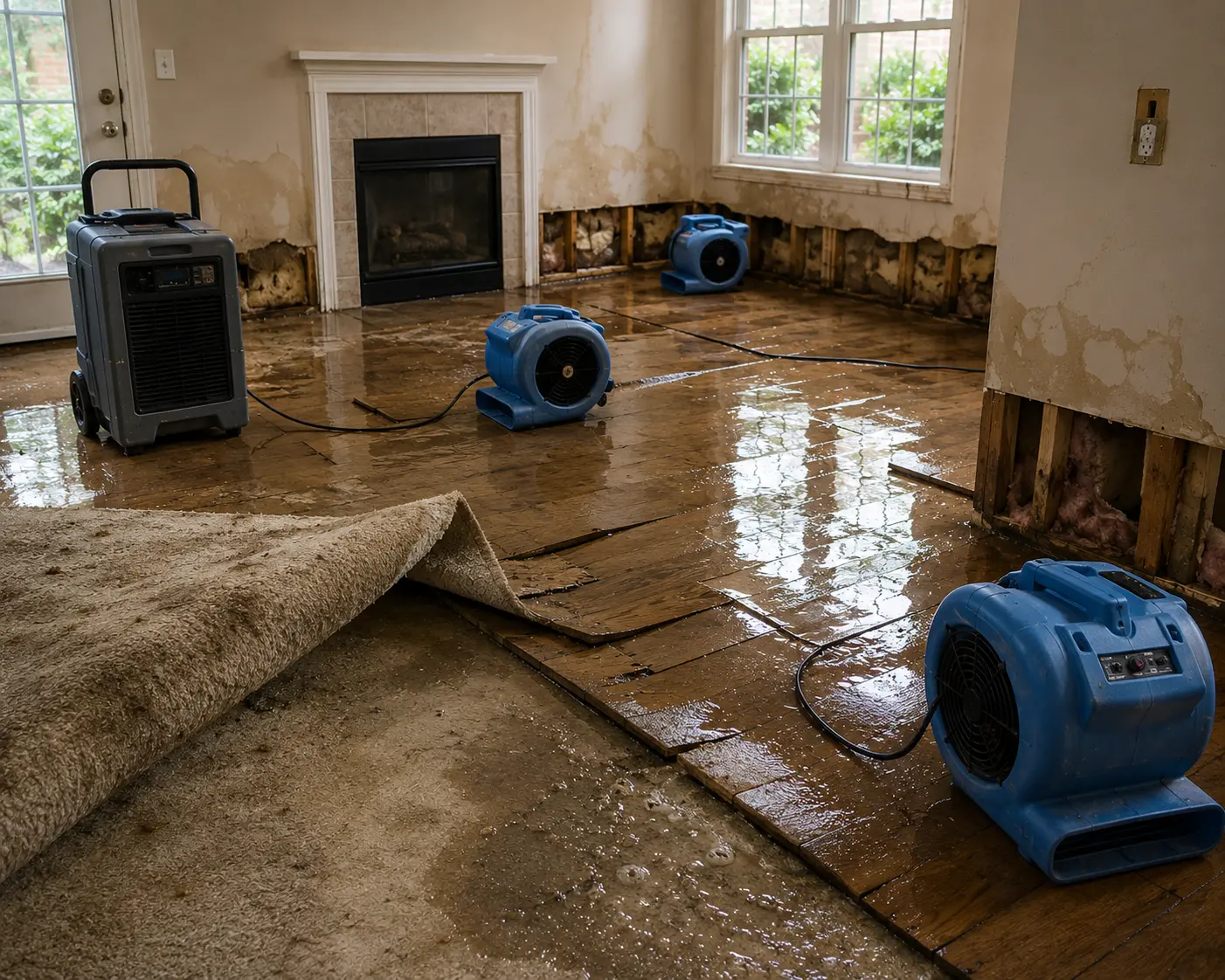
Mold risk rises quickly when moisture remains trapped, so urgent concerns are handled with priority to limit exposure and spread.
Trained technicians apply proven methods for drying, sanitation, airflow planning, and moisture documentation.
Air movers, dehumidifiers, and moisture meters help identify hidden dampness and dry the affected materials thoroughly.
We provide photos, moisture logs, and clear documentation to help support a smoother insurance claim process.
Every moisture issue is different, but the goal stays the same: remove hidden dampness, control humidity, and reduce the conditions that allow mold to return.
We identify the source of the moisture, the materials affected, the humidity level, and the risk areas before prevention work begins.
Standing water is extracted from accessible areas to reduce saturation and prepare the property for controlled drying.
Drying equipment is placed and monitored to pull moisture from air, surfaces, and structural materials.
Affected areas are cleaned, odors are addressed, and contaminated surfaces are treated based on the water source and exposure level.
Once the area is dry, we can recommend prevention steps and monitor the space so mold risk stays low after the initial recovery work.
Arrival time depends on location, weather, and active emergency volume, but urgent water losses are prioritized so mitigation can begin as quickly as possible.
We can work with many insurance providers and supply documentation such as photos, moisture readings, equipment logs, and restoration notes for your claim.
Yes. Mold can develop when moisture remains trapped in porous materials, which is why quick extraction, drying, and humidity control matter after any water loss.
Many drying projects take several days, while larger losses, contaminated water, demolition, or rebuild work can extend the timeline. We explain expectations after the assessment.
If it is safe, stop the water source, avoid electrical hazards, move valuables away from wet areas, and do not handle sewage or structurally unsafe materials.
We serve Charlotte properties with moisture control, drying, sanitation, and prevention support for homes and businesses after water damage.
Tell us what happened, where the moisture came from, and whether the property still feels damp. We will help you understand immediate next steps and schedule mold prevention support for your Charlotte property.