When moisture gets trapped inside walls, under floors, or in hidden cavities, the damage can continue long after the first leak is gone. Our team brings airflow, dehumidification, and moisture monitoring to the job so the structure dries safely and evenly.
We inspect the affected building materials, identify where moisture is trapped, and set up a drying plan that protects framing, finishes, and indoor air quality from further impact.
Water does not always stay where it first appears. In many cases, moisture moves into subflooring, framing, insulation, and closed cavities before the full extent of the problem becomes obvious.
We start by locating where the moisture has gathered, then we set a drying plan around airflow, humidity control, and the specific materials involved so the structure can recover without added damage.
Whether the issue came from a plumbing failure, roof leak, appliance overflow, or storm intrusion, we focus on stable drying conditions and clear progress updates from the first inspection onward.
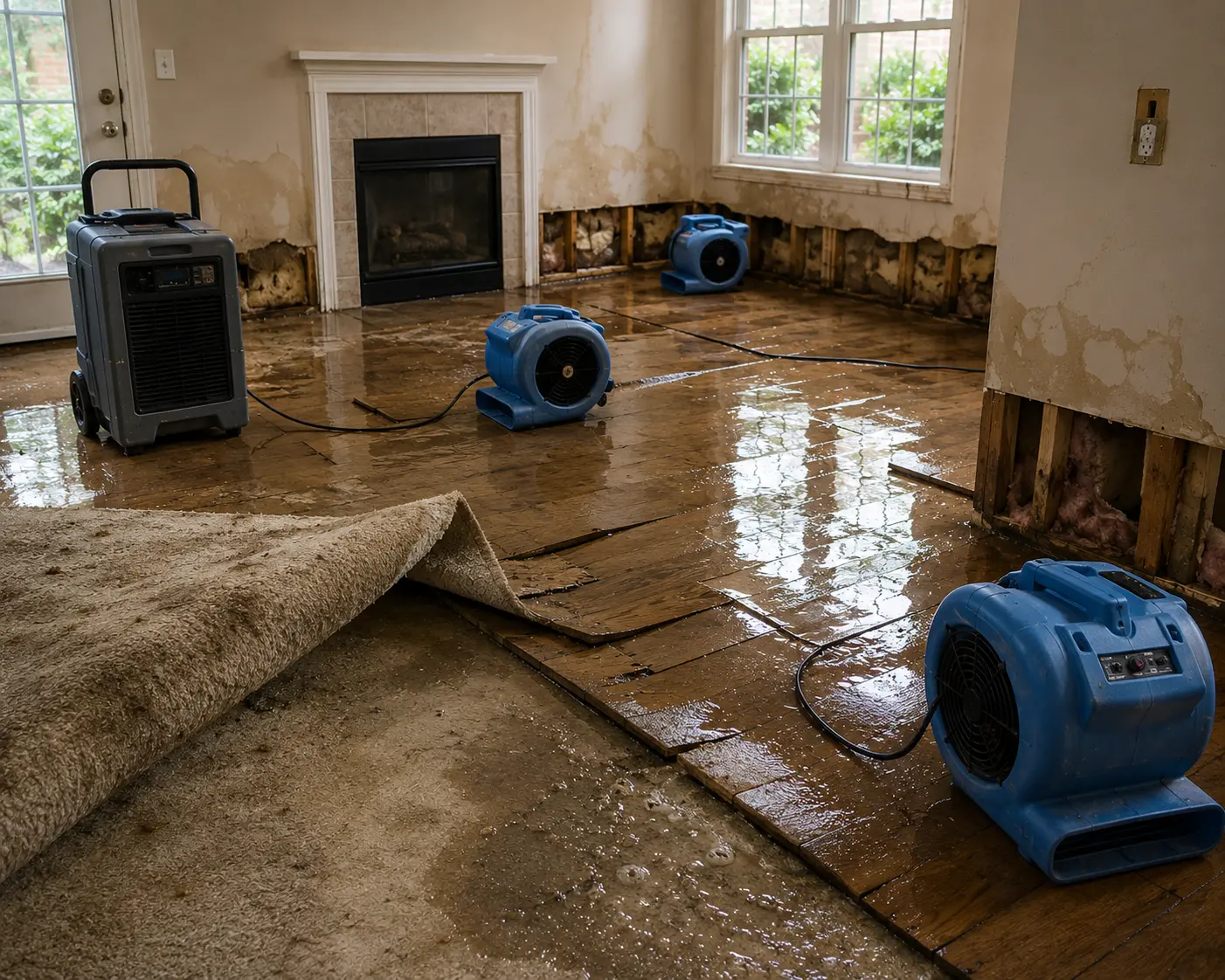
We identify where moisture is collecting before it can spread into framing, finishes, or hidden cavities.
Air movers and controlled airflow help dry large areas more evenly and reduce the chance of secondary damage.
Dehumidifiers lower indoor vapor pressure so the building dries more steadily and with less risk of warping or odors.
We track moisture conditions and share updates so property owners know when the drying target has been met.
Every drying project is different, but the goal is always the same: remove hidden moisture, protect the structure, and keep the space moving toward safe, usable condition.
We look for the source of the moisture, identify affected materials, and map where trapped humidity is concentrated.
Air movers, dehumidifiers, and containment setups are arranged to support even drying across the affected area.
Equipment runs while readings are checked so the drying process stays controlled and measurable.
If one area dries faster than another, we adjust airflow, placement, or equipment to address the imbalance.
We confirm the structure is consistently dry enough to move forward with repair or occupancy decisions.
We use moisture meters, humidity readings, and surface comparisons against unaffected materials so we can confirm the drying phase is complete before work wraps up.
Structural drying focuses on removing trapped moisture from framing, subfloors, wall cavities, and insulation so hidden damage does not continue to spread.
Yes. Dehumidification reduces airborne moisture and supports drying inside surrounding materials, especially when combined with airflow and targeted monitoring.
The timeline depends on the amount of water present, the materials affected, airflow, and temperature. Some projects stabilize in a day or two, while larger losses take longer.
Only as part of a controlled plan. We often use targeted equipment placement and airflow management so drying proceeds safely without spreading moisture through the property.
We serve Charlotte properties with moisture mapping, dehumidification, air movement, and monitoring support for homes, offices, and multi-unit buildings.
Tell us what happened, where the moisture moved, and whether the source is still active. We will help you understand the next steps and schedule drying support for your Charlotte property.